
Origins · 7 min
What Single Origin Coffee Actually Means
One farm, one harvest, one traceable lot. Here is what the label guarantees, how terroir and processing move the cup, and how to read a bag.
By the roast bench · Arhetyp Coffee Roasters
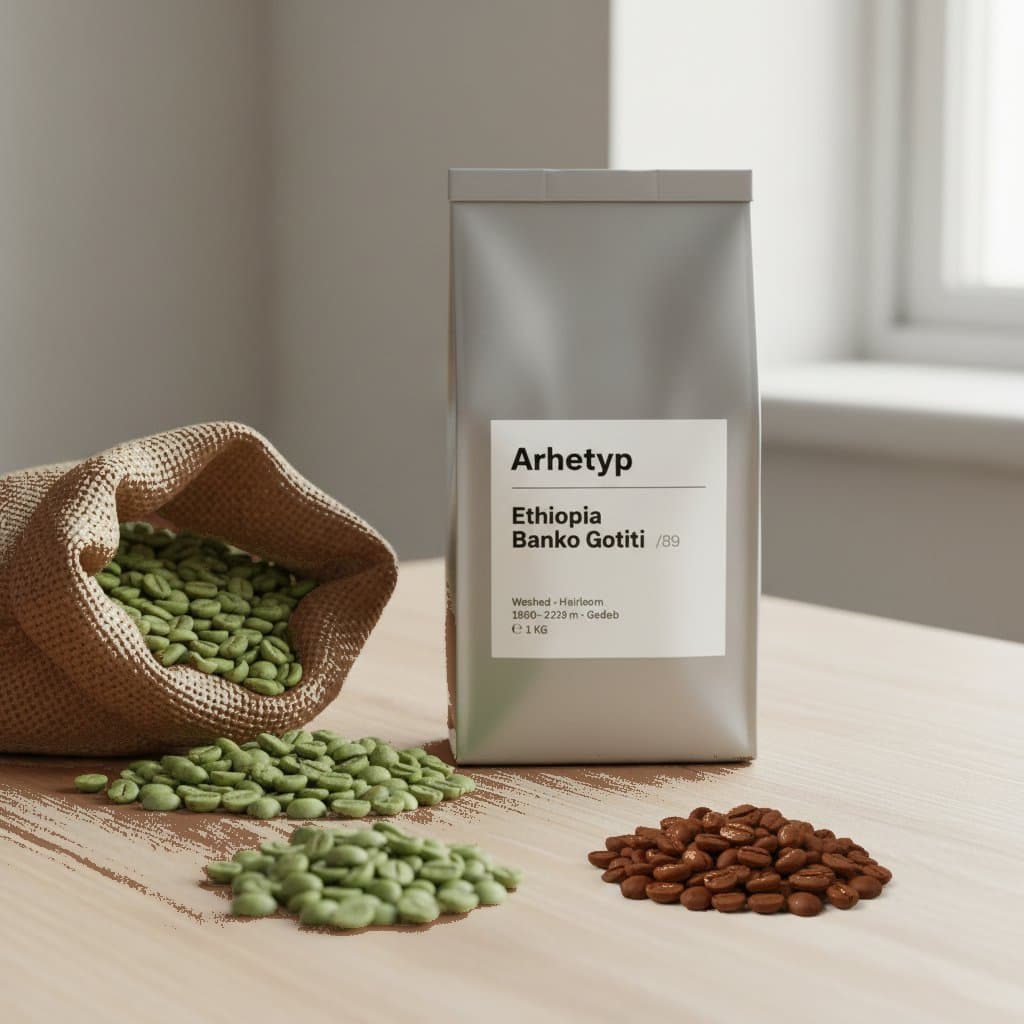
Single origin means coffee from one traceable origin: a single farm or washing station, one harvest, one separated lot. It is not a mix of several countries. The label carries the producer, the altitude, the varietal, the process and the cupping score. The result is a profile tied to one place and one year.
One farm, one harvest, one lot
A single origin comes from a place you can name. Sometimes it is a farm. Sometimes it is a washing station that gathers cherries from a few hundred small plots. The term tells you where, not how good. Traceability is the promise: you can follow the coffee back to producer and harvest.
A microlot goes further. It separates one set of plots, one variety, or one picking day. At Banko Gotiti in Ethiopia, cherries arrive from close to 400 smallholders around the station. The lot is still single origin, because it comes from one area and one harvest. Separating it lets the flavour of that specific ground reach the cup instead of averaging out.
Traceability is not marketing. It ties price to the producer and lets a roaster buy the same lot again next year. It also tells you who grew the coffee, at what altitude, and how it was processed. Every one of those facts changes the roast curve we build.
A blend does the opposite. It combines two or more origins for a stable profile across the year. Our Casa No. 7 blend is built that way: consistent, repeatable, made for milk-based espresso. A single origin shows one place instead, with everything it has, including what it cannot repeat.
Terroir: altitude and soil in the cup
Terroir is the wine word, borrowed correctly. The same plant, Coffea arabica, gives different cups by altitude, soil, temperature and shade. At 2,000 metres, cold nights slow the ripening. The bean grows denser and the sugars concentrate. That is where bright acidity and fruit sweetness come from.
You read this on the label as altitude or grade. SHG means Strictly High Grown, above 1,350 metres. Banko Gotiti sits at 1,900 to 2,100 metres. The bean is denser at the same screen size, so it needs a little more energy in the roast. Volcanic soil adds minerality and structure.
Variety matters as much as height. Ethiopian Heirloom is a family of local landraces, floral and tea-like. Gesha is a single variety with elongated beans and a distinct aromatic. Gesha Las Hermanas carries jasmine and bergamot notes that the plant itself produces, not the roast. Same altitude, different variety, different cup.
Processing: washed, natural, honey
Processing decides how much fruit pulp touches the bean during drying. There are three main routes, and each leaves a clear signature.
In washed, the pulp is removed before drying. The clean bean profile remains. Notes are precise, acidity is clear, body is lighter. Washed coffees show terroir without makeup, which is why they reward careful filter brewing.
In natural, the whole cherry dries with the pulp on, 15 to 25 days on raised beds. The fruit ferments and leaves dense sweetness with berry notes. Naturals are wild, washed are precise. The trade-off is consistency: naturals ask for more control at the drying stage.
Honey sits between them. The skin comes off, but part of the sticky mucilage stays on the bean. The result is a round body with brown-sugar sweetness and tempered acidity. The more mucilage left on, the darker and sweeter the profile.
Why the cup shifts between harvests
A single origin does not taste identical every year. Rainfall, temperature and picking day change. So does the cup. This is not a flaw. It is proof that we drink an agricultural product, not a standardised industrial one.
Season matters. Ethiopian harvest runs from November to February. The fresh-crop green reaches the roastery a few months later. The closer to harvest, the more alive the aromatics. As green ages past 12 months, the top notes fade and the cup flattens. That is why we rotate lots and print the crop year on the bag.
This variation is the point, not the risk. A washed Ethiopian this year may lean lemon and jasmine; the next lot can turn toward peach. We taste every arriving lot on a cupping table before we set a roast profile. The name on the bag stays; the tasting notes are rewritten each harvest. A blend hides this shift on purpose. A single origin lets you drink it.
Why single origin costs more
The price is not a markup on the same coffee. It is built from real steps. Selective picking takes only ripe cherries, so a picker moves slower. Separating a microlot means smaller batches at the mill and more handling. Higher cupping scores come from more work, not luck.
Three costs stack up. Farm and picking is the first: hand-selected cherry at altitude costs more per kilo than machine-stripped commodity coffee. Processing and drying is the second: raised beds and 15 to 25 days of attention add labour. Freight and small-lot import is the third: a 60 kg bag ships at a worse rate than a container of one blend. A cup scored 89 carries all three.
Single origin at espresso and filter
The same coffee says different things by method. At espresso, pressure concentrates everything: sweetness, acidity, body. At filter, water pulls out clarity and the finer notes. A bright washed Ethiopian can feel sharp as espresso and clean as filter.
For a light single origin at espresso, start at 18 g in and 36 g out, a 1:2 ratio, in 28 to 32 seconds, at 93°C. For more clarity and acidity, pull 18 g in and 32 g out, a shorter ristretto that lifts sweetness. On a V60, use 15 g coffee to 250 g water, a 1:16 ratio, at 94°C, over 2:30 to 3:00. Adjust the grind before you touch the ratio.
Starting recipe: Banko Gotiti 89
- Espresso in
- 18 g
- Espresso out
- 36 g (1:2)
- Shot time
- 28–32 s
- Water temp
- 93°C
- V60 filter
- 15 g / 250 g (1:16)
- Filter temp
- 94°C
- Brew time
- 2:30–3:00
Numbers are a starting point. Adjust the grind first, then the ratio.
How to read an Arhetyp bag
A well-labelled bag tells you where the coffee comes from before you taste it. Five fields carry the weight, and a good bag prints all of them.
Label anatomy
- Producer / station
- farm or washing station, e.g. Banko Gotiti station
- Altitude
- metres above sea level, 1,900–2,100 m
- Varietal
- the arabica variety, Ethiopian Heirloom or Gesha
- Process
- washed, natural or honey
- Cupping score
- the SCA score out of 100, Banko Gotiti 89, Gesha Las Hermanas above 90
The roast date is not optional. Look for it first. Whole beans peak between 7 and 30 days after roasting.
A cupping score of 89 places Banko Gotiti in the top specialty band; 80 is the specialty threshold. Gesha Las Hermanas goes further, with floral and bergamot notes that explain the price of the variety. Both are on the shelves while the harvest lasts. Choose a single origin when you want to taste a place, not a formula, and reach for a blend when you want the same cup every morning.