
Brew method · 8 min
V60 vs AeroPress: Which One Fits You (and the Recipes)
Two brewers, two extraction mechanisms, two cups. We compare V60 and AeroPress on seven measurable criteria, with a dial-in recipe for each on light roast.
By the roast bench · Arhetyp Coffee Roasters
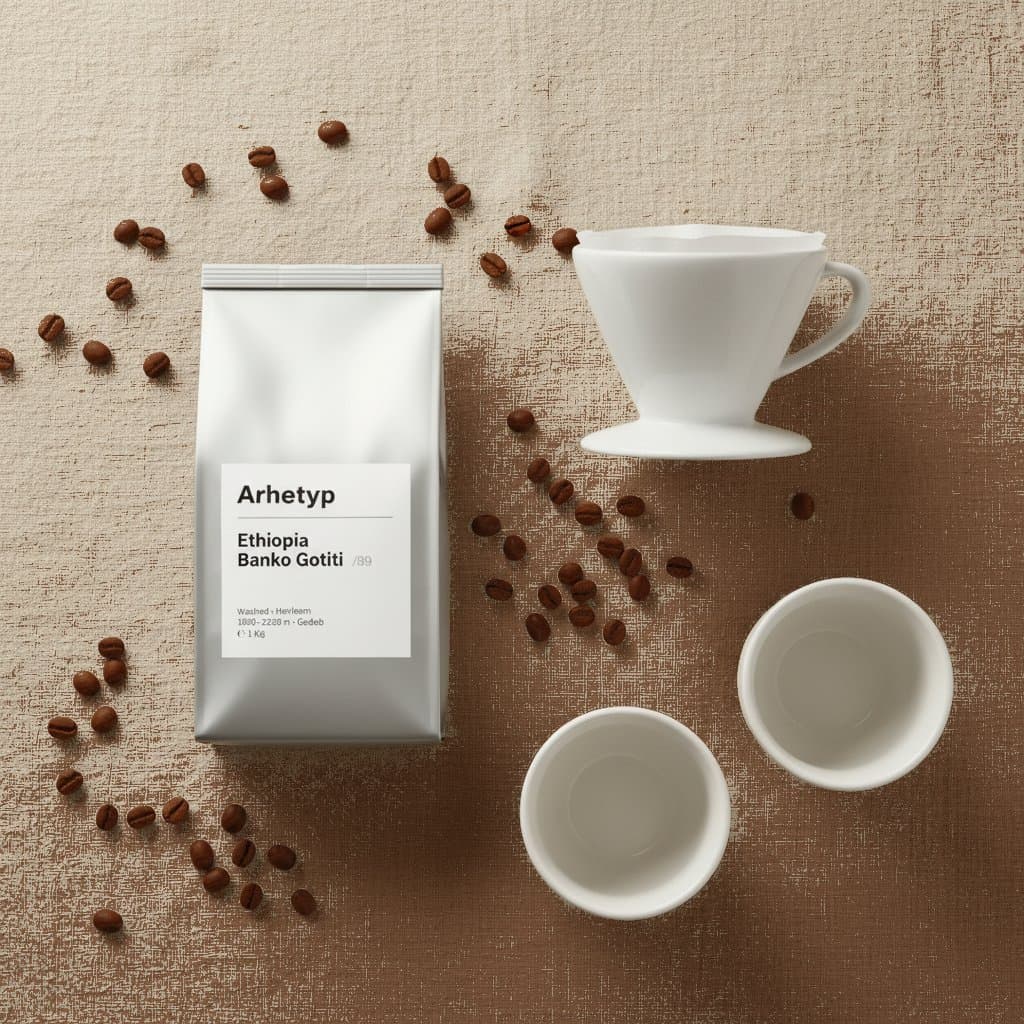
“V60 or AeroPress, which is better” is the wrong question. The two brewers extract through different mechanisms. V60 percolates: water passes through the coffee bed and leaves. AeroPress immerses, then presses. The result is not better or worse, it is different in structure. For the light roasts we work with, the choice depends on what you want in the cup and where you brew it.
The core difference in 45 words
V60 gives clarity: defined acidity, separated aromatics, light body. AeroPress gives body: denser texture, rounded acidity, wide tolerance for mistakes. V60 needs 2:45 to 3:00 and pour control. AeroPress needs 90 seconds and forgives temperature, grind, and timing. On light roast, both work, with different parameters.
How they extract: percolation vs immersion
In a V60, water is in constant motion. It enters at the top, flows through the bed, and drains through the cone. Contact time is short and uneven, so grind size and pour rhythm control the extraction. Fresh grounds slow the flow; a coarse grind speeds it. This is why V60 rewards technique and punishes a careless pour.
In an AeroPress, the water sits with the coffee for most of the brew. Extraction happens by full immersion, then the plunge separates the grounds in a few seconds. Contact time is fixed by the clock, not by the flow. That makes the method stable: change one variable and the cup shifts predictably. It is the reason AeroPress travels well and tolerates a rough grinder.
Two variables sit underneath both methods and matter more than the brewer. The first is grind consistency. A burr grinder produces even particles, which extract at the same rate; a blade grinder produces dust and boulders, which do not. The second is water. Aim for 80 to 120 ppm total hardness. Distilled water flattens the cup, and very hard water mutes acidity. Fix these two before you argue about V60 against AeroPress.
Our V60 recipe: four pours for light roast
Light roasts are dense and extract slowly. A single continuous pour under-extracts them and leaves a sour, thin cup. We split the brew into four pours. Each pour re-saturates the bed and pushes total extraction up without raising the temperature. Rinse the paper filter with hot water first, then discard that water.
V60 — four-pour, light roast
- Dose
- 15 g
- Water
- 250 g (ratio 1:16.7)
- Grind
- medium-fine, ~600 µm
- Temperature
- 94 °C
- Bloom
- 50 g, 40 s
- Pour 2
- to 125 g
- Pour 3
- to 190 g
- Pour 4
- to 250 g
- Total time
- 2:45 – 3:00
Pour in slow spirals, keep the bed level. Aim to finish the drawdown by 3:00.
The bloom does real work. Fresh coffee holds carbon dioxide, which repels water and blocks extraction. The 50 g bloom releases that gas over 40 seconds, so the following pours saturate the bed evenly. If the bed erupts and bubbles hard, the coffee is fresh, which is what you want. If nothing happens, the roast date is old.
If the cup tastes sour or hollow, the coffee is under-extracted. Grind finer, raise the temperature by 1 to 2 degrees, or slow the pours. If it tastes bitter or dry, it is over-extracted. Grind coarser or drop the temperature. Change one variable at a time and taste before adjusting again. Keep a short log of dose, grind, and time until the cup lands, then stop moving things.
Our AeroPress recipe: inverted, body and tolerance
We brew inverted so the water stays in contact with the grounds until the plunge. A lower temperature suits light roast here, because full immersion is efficient and a hot brew turns harsh. The result is a cup with more body than a V60 and a softer acidity. It is repeatable on a hand grinder and a travel kettle.
AeroPress — inverted, light roast
- Dose
- 16 g
- Water
- 230 g (ratio 1:14.4)
- Grind
- medium, ~800 µm
- Temperature
- 85 °C
- Method
- inverted, single paper filter
- Steep
- pour all water, stir once, cap at 30 s
- Flip and press
- at 1:15, press over 20 s
- Total time
- ~1:35
Press until you hear a hiss, then stop to avoid pulling bitter fines through.
For a lighter, cleaner cup, dilute the concentrate with 40 to 60 g of hot water after pressing. For more body, press slightly warmer or steep 15 seconds longer. AeroPress moves fast, so its variables are easy to isolate: the clock is fixed, and grind and temperature do the rest.
The paper filter also gives you a lever. A single paper filter keeps the cup clean and removes most oils. Swap in a metal filter and more oils and fine particles pass through, which adds weight and a heavier mouthfeel. Start with paper on a light roast, then try metal once the recipe is stable. It is a cheaper adjustment than a new grinder.
Seven criteria, side by side
V60 vs AeroPress on seven criteria
- Clarity
- V60 high, aromatics separated | AeroPress medium
- Body
- V60 light | AeroPress medium to full
- Brew time
- V60 2:45–3:00 | AeroPress ~1:35
- Error tolerance
- V60 low, pour matters | AeroPress high, forgiving
- Price
- V60 cone ~90 RON | AeroPress ~250 RON
- Travel
- V60 fragile glass | AeroPress plastic, packs flat
- Cleaning
- V60 rinse filter | AeroPress eject puck, wipe
Neither wins outright. Each column describes a different job.
The verdict, by profile
The desk. If you brew one cup at the same counter every morning, choose V60. You control the water, you have time, and clarity rewards a good single origin. The two-degree adjustments become muscle memory within a week.
The road. If you brew in hotels, offices, and kitchens you do not control, choose AeroPress. It survives a backpack, a bad grinder, and an unknown kettle. The fixed clock holds the recipe together when everything else changes.
The slow Sunday. If the brew is the ritual, keep both. Pour a V60 when you want to read a coffee, reach for the AeroPress when you want a denser, quieter cup. The two methods teach different things about the same beans.
What to brew in each
Match the process to the method. Washed coffees carry defined acidity and a clean structure, which V60 amplifies. Our Ethiopia Banko Gotiti, a washed lot, reads clearly on a four-pour V60: floral top notes and a bright, distinct finish. Natural and honey-processed coffees carry more sweetness and body, which AeroPress rounds out.
The Casa No. 7 blend sits comfortably in an AeroPress, where its structure turns into a soft, full cup for the morning. For either brewer, the variable that matters most is freshness. Check the roast date on the bag, brew within four to six weeks, and use current-harvest lots. The single origin coffees in the shop are labelled with roast date and process, so you can pick the one that suits your method.
One last note on expectation. A light roast will not taste like the dark, roast-forward coffee most people grew up on. The flavour comes from the origin, not from the roast: citrus, stone fruit, florals, tea. V60 shows these traits at full contrast, AeroPress softens them into something rounder. Neither is the correct answer. Brew both with the same bag over a week, and let the cup, not the internet, settle the question.